What B2B brands can learn from vinyl records and sold-out cinemas
AI, high-effort marketing, and authentic brand experiences. Where do we begin?
Gen Z is buying vinyl.
Cassette players are now available in John Lewis.
No, we’ve not entered a timewarp. Even before AI dominated our screens and feeds, the trend was already well and truly in play. And as time goes on and the world is increasingly desensitised to what’s been dubbed ‘AI slop’, younger generations are craving human connection, craft and high effort from brands like never before.
What do the numbers say?
In a 2025 Vinyl Alliance survey of 13 to 28-year-old vinyl fans across the UK, US and Germany, 76% said they buy records at least once a month.
Think about it: this is a generation that can stream almost any song ever recorded for the price of a Pret sandwich a month. Yet UK vinyl sales grew for an 18th consecutive year in 2025, reaching 7.6 million units. People are serving up more of their hard earned cash for less convenience, and they are doing it on purpose.
It isn’t only records. In a Fandango survey of more than 7,000 US moviegoers, 87% of Gen Z had seen at least one film in a cinema in 2025, the highest share of any generation. And according to Morning Consult, 16% of Gen Z adults own a dumbphone, more than any other generation, with another 28% interested in getting one.
Ask them why, and the answers are revealing. Gen Z vinyl fans are more likely than millennials (61% vs 53%) to swap digital habits for vinyl to improve their wellbeing. In a Yahoo/YouGov poll, 54% of Gen Z cinemagoers said they want an experience they can’t get at home.
Here’s our read on what links it all. These are choices where the effort is visible: a record someone pressed and packaged, a film you made the trip to see, a phone that does one thing really bloody well. They are a small, deliberate opt-out from being optimised to death.
Which brings us to B2B. Your buyers are these same people, and if they’re not yet, they will be one day. And the instinct doesn’t switch off when they open their work inbox.

The bet we all made
For the best part of fifteen years, B2B marketing has been built on one big idea: efficiency. Map the journey, score the leads, template the emails, A/B test the hell out of everything, then let the system run away with it.
And to be fair, for some it really worked. Cost per lead went down, dashboards went green and stretched teams got some well needed breathing room.
The catch is that efficiency and distinctiveness are not the same thing. When everyone buys the same tools and follows the same playbook, everyone ends up sounding the same.
If you want to test this, open three competitor homepages side by side and cover the logos. It’s a slightly uncomfortable game.
Better yet, take a look at your LinkedIn InMails. 100% sales, 0% originality.
What buyers are telling us
B2B buyers aren’t rejecting vendors. They’re rejecting generic vendors. The research is fairly consistent on this.
They avoid irrelevant outreach
In Gartner’s 2025 survey of 632 B2B buyers, 73% said they actively avoid suppliers who send irrelevant outreach, and 61% preferred a rep-free buying experience overall. By the 2026 edition, that preference had risen to 67%.
But they still want people at the moments that matter
The same Gartner research found that for tasks needing context, such as working out whether a solution actually fits their business, buyers do want a seller’s input. They don’t want less human contact. They want less pointless human contact.
They judge you on your thinking
In the 2025 Edelman-LinkedIn B2B Thought Leadership Impact Report, 73% of decision-makers said they use thought leadership to assess the thinking a company would bring to a project. And 95% of the “hidden” buyers who influence deals from outside your CRM said strong thought leadership makes them more receptive to outreach.
They can smell the machine
A Gartner survey from September 2026 found 65% of consumers think brands produce too much AI-generated marketing, and 57% said it has made them less trusting of brand messaging overall. That’s consumer-focused data, but your buyers are essentially consumers on their way home.
What visible effort looks like
Let’s rewind a bit. On Black Friday 2011, Patagonia ran a full-page ad in The New York Times with the headline “Don’t Buy This Jacket”. The copy underneath set out the environmental cost of making it and asked readers to think twice before buying anything.
No algorithm suggests that. It took people arguing for it, defending it in meetings and accepting that it wouldn’t please everyone. According to Casey Sheahan, Patagonia’s CEO at the time, the roughly $57,000 ad generated $40-50 million in free publicity.
Nobody is suggesting you tell prospects not to buy your software. The lesson is simpler: when a decision was clearly made by humans who cared, people notice. Effort is legible, and so is its absence.
Where craft pays off in B2B
Craft doesn’t mean doing everything by hand. It means putting human judgement where buyers will feel it. Three places stand out.
1. Events people actually remember
Events already carry exceptional weight: 78% of B2B event organisers say in-person conferences are their most impactful marketing channel. Yet only 23% of attendees said their most recent in-person event had plenty of interactive sessions, and 72% said ample unscheduled time is vital. Organisers are building agendas and attendees want room to talk.
That gap is where effort shows. A few ways to close it:
- Invite on purpose
A smaller room of the right people beats a big room of badge scans. - Design for conversation
Fewer back-to-back sessions, more space for the talks that happen in between. - Put your experts in the room
Speakers and executives who stay and talk, rather than present and vanish faster than Houdini. - Follow up like you were listening
A note that references the actual conversation, not a thanks-for-attending blast.
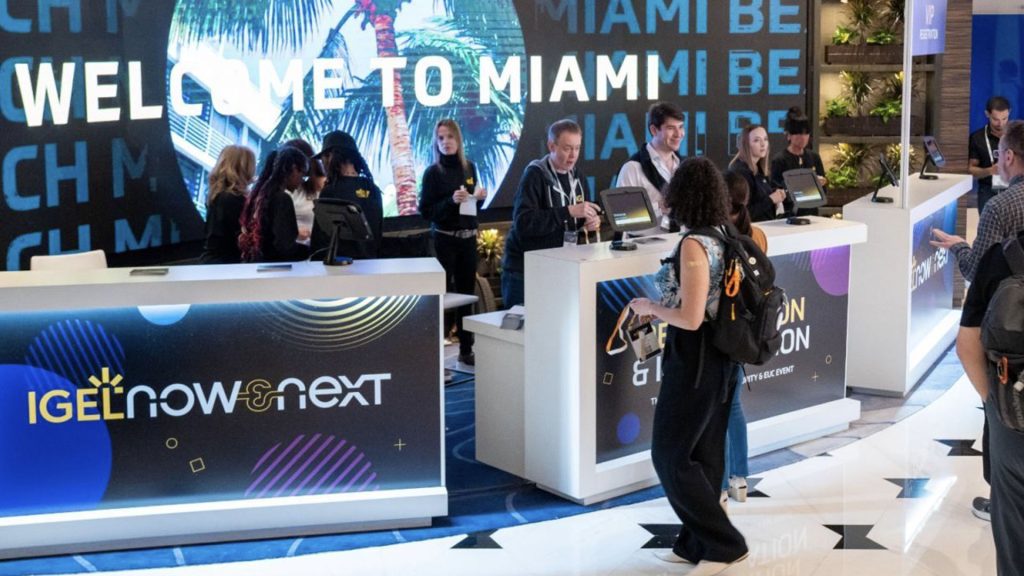
When we worked with IGEL on Now & Next 2026 in Miami, much of the craft was invisible to attendees: speaker briefing and rehearsals, one visual identity across every space, months of pre-production. They felt the result rather than the effort, but without the effort there would never have been such a strong result.
2. Sales enablement built around real deals
Most enablement material is written about the product, then swiftly ignored by the people meant to use it. It also creates confusion: Gartner found 69% of buyers had noticed inconsistencies between a supplier’s website and what its sellers told them.
Better enablement starts with how deals actually happen:
- Listen to recorded calls from deals you won and lost, and note where conversations stalled.
- Map the real stages buyers go through, not just the stages in your CRM.
- Build resources for the questions and objections that come up at each stage. Best case scenario through to worst case.
- Revisit it every quarter with the sales team, because the objections change.
- This is the thinking behind the sales tools we built for Dell: a monitor chooser that began life at a single event and grew into a suite used by thousands of sales reps worldwide, because it was designed, and evolved around how they actually sell.
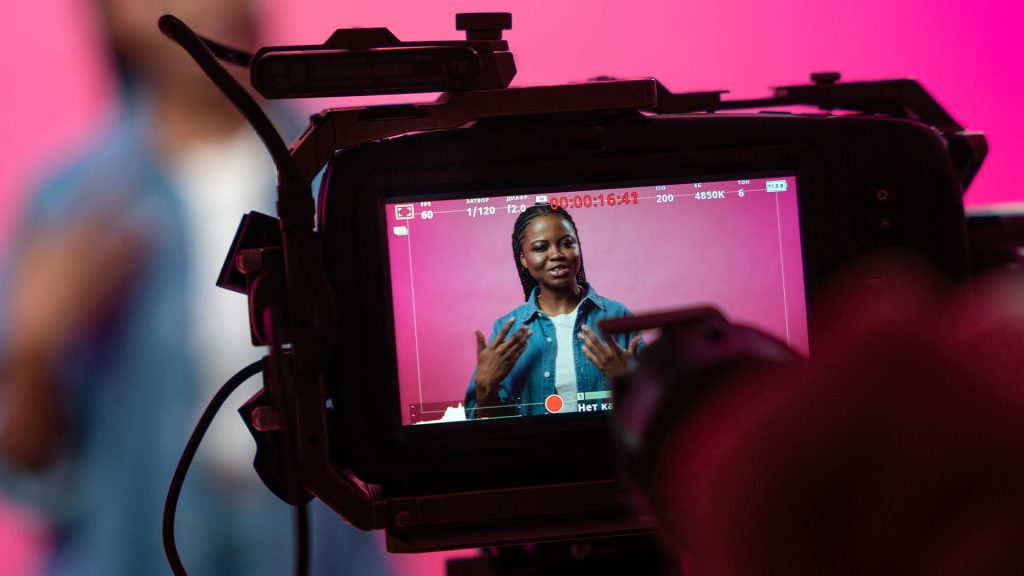
3. Video with a real person thinking on camera
B2B buyers have seen every flavour of templated explainer. What still cuts through is someone who knows the subject explaining it properly.
- Start with a real problem, one worth watching even if your company didn’t exist.
- Put a genuine expert on camera. An engineer with real opinions beats a polished voiceover.
- Edit for clarity. Keep the natural pace that shows a real person is thinking.
- Measure what matters. Completion rates, shares and the conversations a video starts tell you more than views.
The honest trade-off
Let’s not pretend this is free. Putting more thought into fewer accounts means you’ll reach fewer people, your cost per lead will rise and your volume metrics will dip before anything else improves. That’s a hard sell in a quarterly review.
There’s also a balance to strike. Research from the Ehrenberg-Bass Institute and LinkedIn’s B2B Institute suggests only around 5% of B2B buyers are in-market at any given time. So deep, crafted work with priority accounts should sit alongside staying visible to everyone else, not replace it entirely.
What makes the case internally is agreeing the right measures before you start:
- Conversion rate from engaged accounts, not raw lead volume
- Deal size and sales cycle length for those accounts
- Retention and expansion of the customers you win
- Quality conversations: meetings that went somewhere, introductions made, events people followed up on
Get sales leadership aligned early, too. Fewer, better opportunities only feel like progress if sales agrees they’re better. And measurement is already a known weak spot: 70% of event organisers report difficulty demonstrating ROI for in-person events. Decide upfront what success looks like, and you won’t be arguing about it afterwards.
Where AI fits into all of this
None of this is an argument against AI. It’s an argument about where it goes.
AI is genuinely useful for the slow, mechanical parts of craft: summarising earnings calls and news about a target account, spotting patterns across a market, producing a first draft for someone to rewrite. That frees up time for the parts only people can do, such as forming a point of view, making a judgement call and building a relationship.
Where it goes wrong is when AI becomes the visible face of the work. In Klaviyo’s survey of 8,000 consumers, people who noticed AI-generated content in marketing were four times more likely to trust the brand less than more (31% vs 7%).
Your buyers are using AI too: 45% of B2B buyers told Gartner they used it during a recent purchase. If machines are summarising your content before a person reads it, generic messaging gets flattened into nothing. Specific, opinionated work survives the brutal wrath of the summary.
Worth the effort
Nobody buys a record because it’s the most efficient way to hear a song. They buy it because someone clearly cared about making it, and holding it makes them feel that care.
B2B is no different. The email that shows someone understood your business, the event that left room for a proper conversation and face-to-face time, the video where an expert actually explains something: each one tells a buyer they were worth somebody’s time.
In a market where most of your competitors are busy automating that feeling away, it’s a surprisingly good way to stand out.
This all sounds straightforward enough in theory, but in practice it can be overwhelming to decide when and how to split your focus and effort.
At Fuel, we straddle the line between being your closest confidant and strategic agency teammate, with one hand always firmly in the unknowns of the real-world. This objectivity becomes a priceless asset for centering your high-effort marketing activity when you’re pulled under by the drift of the day-to-day.
Ready to put effort where your buyers will feel it?
From events people remember to sales tools built around real deals, we help B2B brands decide where craft pays off and then deliver it properly. Let’s talk about where your effort should go next or take a look at our b2b marketing strategy services.

Our thinking.